
shell
ผู้เยี่ยมชม
Is Precision Machining for Kovar Alloy the Best Choice for High-Precision Components? (63 อ่าน)
26 ก.ค. 2569 17:26
Precision machining for Kovar alloy has become an essential process for industries that demand exceptional dimensional stability, thermal compatibility, and reliable sealing performance. Kovar alloy is a specialized iron-nickel-cobalt material known for its controlled coefficient of thermal expansion, making it an ideal choice for components that must match the expansion characteristics of glass and ceramics. Because of these unique properties, manufacturers rely on precision machining for Kovar alloy when producing critical parts used in aerospace, medical devices, electronics, telecommunications, defense systems, and semiconductor equipment.
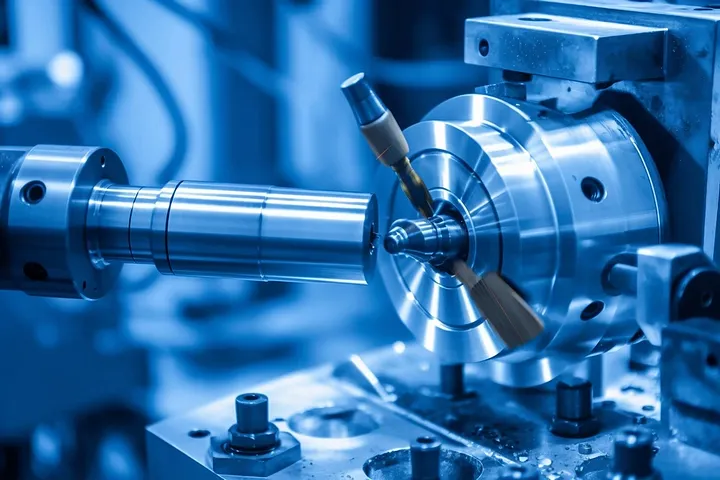
Unlike conventional metals, Kovar requires specialized machining techniques to maintain tight tolerances and preserve its structural integrity. High-quality CNC machining, precision milling, precision turning, drilling, grinding, and finishing processes are commonly used to manufacture complex Kovar components with excellent accuracy. As industries continue demanding smaller, more reliable, and longer-lasting parts, precision machining for Kovar alloy remains one of the most valuable manufacturing solutions available today.
Advanced Manufacturing with Precision Machining for Kovar Alloy
Producing high-quality Kovar components requires advanced manufacturing technology combined with experienced engineering knowledge. CNC machining has transformed precision machining for Kovar alloy by allowing manufacturers to achieve extremely accurate dimensions while minimizing production errors. Computer-controlled machining centers provide consistent repeatability, making them ideal for both prototype development and large-scale production.
The machining process typically begins with carefully selected Kovar alloy stock, followed by precision cutting, milling, turning, and drilling operations. Because Kovar possesses unique hardness and work-hardening characteristics, machinists must select appropriate cutting speeds, tooling materials, and cooling methods. Carbide cutting tools, optimized feed rates, and controlled machining environments help reduce tool wear while maintaining superior surface finishes.
Precision machining for Kovar alloy also supports the production of highly detailed custom components featuring intricate geometries and complex internal structures. These capabilities allow manufacturers to create parts for vacuum systems, hermetic packages, electronic housings, microwave devices, laser assemblies, and medical implants where even the smallest dimensional variation can affect performance.
Modern CNC machining centers further improve productivity by reducing setup times, increasing automation, and ensuring repeatable quality throughout every production batch. This level of manufacturing precision is particularly valuable for industries where reliability and consistency cannot be compromised.
High-Performance Applications Using Precision Machining for Kovar Alloy
Precision machining for Kovar alloy serves numerous industries that require exceptional thermal stability and reliable mechanical performance. Aerospace manufacturers frequently use machined Kovar parts in satellite systems, avionics, aerospace sensors, and electronic enclosures because the alloy maintains dimensional stability under varying temperatures.
The electronics industry also depends heavily on precision machining for Kovar alloy. Glass-to-metal seals, semiconductor packages, integrated circuit housings, microwave components, and fiber optic assemblies all benefit from Kovar's controlled thermal expansion. Since these applications often experience repeated heating and cooling cycles, Kovar helps minimize stress between dissimilar materials, improving long-term reliability.
Medical technology manufacturers choose precision-machined Kovar components for diagnostic equipment, implantable devices, surgical instruments, and imaging systems where precision and material stability are essential. The combination of tight machining tolerances and dependable material properties contributes to improved device performance and operational safety.
Defense and military applications similarly rely on precision machining for Kovar alloy to manufacture radar systems, communication equipment, optical assemblies, and high-performance electronic components. These demanding environments require materials capable of maintaining structural integrity under extreme operating conditions.
Industrial automation, scientific research equipment, laser technology, and vacuum engineering also benefit from custom Kovar machining. As advanced manufacturing technologies continue evolving, demand for precision-machined Kovar parts continues to expand across multiple high-tech industries.
Superior Quality Through Precision Machining for Kovar Alloy
Achieving excellent results with precision machining for Kovar alloy requires more than advanced equipment. Successful production depends on process optimization, quality control, engineering expertise, and careful inspection throughout manufacturing.
Precision dimensional inspection ensures every machined component meets exact customer specifications. Coordinate Measuring Machines (CMM), optical inspection systems, digital measurement equipment, and advanced metrology techniques verify critical dimensions with exceptional accuracy. These quality assurance procedures reduce defects while maintaining consistent manufacturing standards.
Surface finishing also plays an important role in precision machining for Kovar alloy. Depending on application requirements, components may undergo polishing, grinding, lapping, passivation, plating, or specialized surface treatments to improve corrosion resistance, appearance, and sealing performance. Smooth surface finishes are especially important for vacuum components, hermetic seals, and electronic packaging where contamination or surface irregularities can negatively impact performance.
Custom machining services allow manufacturers to produce both prototype and production quantities tailored to unique project requirements. Engineering teams often collaborate closely with customers to optimize component designs for manufacturability while preserving critical functional characteristics. This collaborative approach reduces production costs, shortens lead times, and improves overall product quality.
With modern CNC technology, precision machining for Kovar alloy consistently delivers micron-level accuracy, outstanding repeatability, and exceptional reliability for demanding industrial applications. These advantages help manufacturers meet increasingly strict performance standards while maintaining cost-effective production.
Conclusion
Precision machining for Kovar alloy continues to play a vital role in advanced manufacturing where accuracy, thermal stability, and long-term reliability are essential. Its unique material properties make it one of the preferred choices for industries requiring glass-to-metal sealing, high-performance electronic packaging, aerospace assemblies, medical equipment, semiconductor devices, and precision-engineered components.
By combining advanced CNC machining, experienced engineering practices, rigorous quality control, and specialized manufacturing expertise, precision machining for Kovar alloy delivers components capable of meeting the most demanding industrial specifications. As technology advances and precision requirements continue increasing, manufacturers will remain dependent on expertly machined Kovar parts that offer consistent performance, exceptional dimensional accuracy, and dependable durability across a wide range of critical applications.
shell
ผู้เยี่ยมชม