
shell
ผู้เยี่ยมชม
Acetal and Delrin Machining Differences: Which Engineering Plastic Is Better for Precision CNC Machining? (104 อ่าน)
26 ก.ค. 2569 13:38
Precision machining demands materials that combine strength, stability, and excellent machinability. Among the most popular engineering plastics used in CNC manufacturing are acetal and Delrin. Although these names are often used interchangeably, they represent slightly different materials with unique machining characteristics. Understanding acetal and Delrin machining differences helps manufacturers, engineers, product designers, and CNC machining professionals select the right material for achieving high-quality results, tight tolerances, and long-lasting performance.
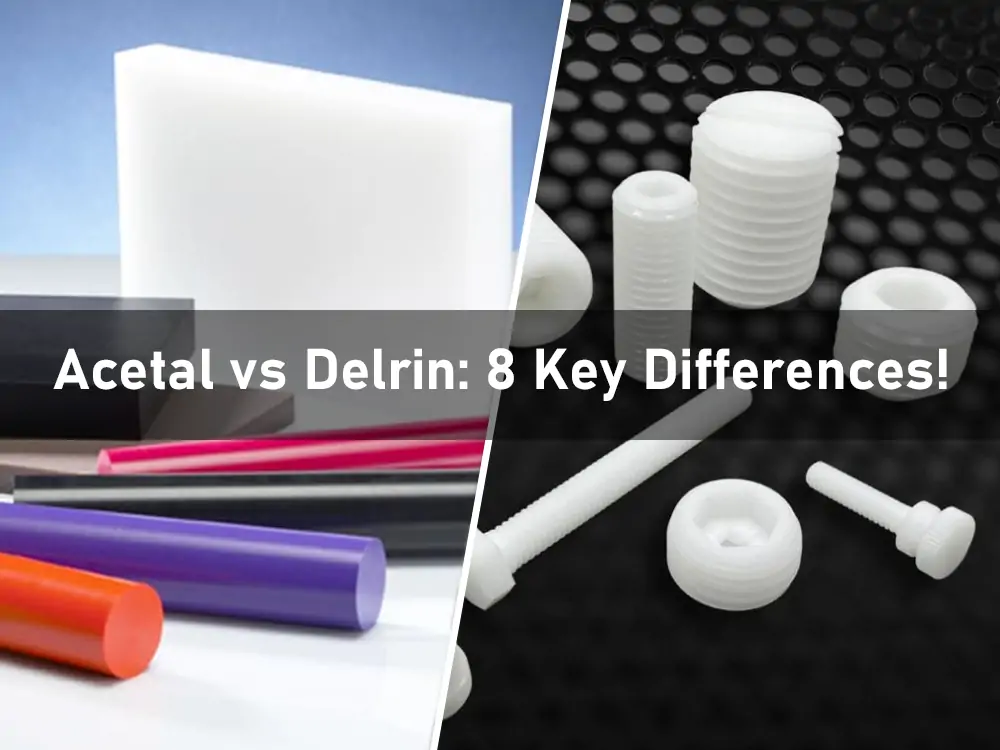
Acetal is a family of polyoxymethylene (POM) engineering plastics available in both copolymer and homopolymer forms. Delrin is the trademarked name for a premium acetal homopolymer developed by DuPont. Both materials are valued for their excellent dimensional stability, low friction, wear resistance, and mechanical strength, making them ideal for producing precision parts such as gears, bearings, bushings, valve components, rollers, and custom-machined industrial assemblies.
A detailed understanding of acetal and Delrin machining differences is essential because even small variations in material properties can influence machining speed, surface finish, tool wear, production efficiency, and the overall quality of finished components.
Machining Performance and Material Characteristics
The first step in evaluating acetal and Delrin machining differences is understanding how each material behaves during machining operations. Both materials are considered among the easiest engineering plastics to machine because they produce clean chips, maintain excellent dimensional stability, and allow manufacturers to achieve smooth surface finishes with minimal effort.
Delrin generally offers greater stiffness and slightly higher mechanical strength because of its homopolymer structure. This increased rigidity allows it to maintain excellent dimensional accuracy during CNC milling, turning, drilling, and threading operations. The material resists deformation while cutting, making it particularly suitable for precision components with tight tolerances and complex geometries.
Acetal copolymer also machines exceptionally well but provides additional advantages in environments where moisture and chemical exposure are concerns. It delivers consistent cutting performance while maintaining excellent stability throughout machining operations. Manufacturers appreciate its ability to produce accurate parts with minimal internal stress, helping reduce the possibility of dimensional changes after machining.
Both materials generate low cutting resistance, allowing faster machining speeds and reduced tool wear compared to many other engineering plastics. Their natural lubricity also contributes to smoother cutting action, resulting in cleaner finished surfaces and improved production efficiency.
Surface Finish and Production Efficiency
A closer look at acetal and Delrin machining differences shows that both materials are capable of producing outstanding surface finishes without requiring extensive secondary processing. Their fine chip formation allows CNC machines to create precision components with excellent appearance and high dimensional accuracy.
Delrin often produces an exceptionally smooth surface because of its higher rigidity and structural consistency. Components manufactured from Delrin frequently require minimal polishing or finishing, making it an excellent choice for visible mechanical parts and precision engineering applications. Automotive components, aerospace assemblies, and robotics systems often utilize Delrin because of its ability to maintain both structural integrity and excellent cosmetic quality.
Acetal copolymer also delivers excellent surface finishes while offering improved consistency in humid production environments. It performs reliably during long machining cycles and maintains stable dimensions throughout the manufacturing process. Industries producing medical equipment, food processing machinery, pharmaceutical devices, and water handling systems frequently choose acetal copolymer because of its balanced machining performance and environmental resistance.
Another important consideration involves machining productivity. Both materials support high feed rates and efficient cutting speeds, allowing manufacturers to reduce cycle times without sacrificing quality. Their ability to machine accurately with minimal tool wear lowers production costs while improving manufacturing consistency across large production runs.
Precision CNC machining companies often recommend both materials for custom components because they maintain tight tolerances while reducing machining complexity. This combination of speed, accuracy, and reliability makes acetal and Delrin among the most widely used engineering plastics in modern manufacturing.
Mechanical Stability and Long-Term Performance
An effective evaluation of acetal and Delrin machining differences also considers how machined components perform after manufacturing. Delrin offers higher tensile strength, increased stiffness, and superior fatigue resistance, making it particularly suitable for components exposed to continuous mechanical loading or repetitive movement.
Applications involving gears, bearings, structural supports, conveyor systems, and mechanical linkages benefit from Delrin's excellent resistance to creep and long-term deformation. Its ability to maintain mechanical performance under demanding operating conditions contributes to longer service life and improved equipment reliability.
Acetal copolymer provides excellent long-term stability in applications involving moisture, industrial chemicals, and frequent cleaning procedures. Its enhanced resistance to hydrolysis and chemical attack allows machined components to retain their mechanical properties even after prolonged exposure to challenging environments. This makes acetal copolymer an excellent choice for fluid handling systems, food-grade equipment, medical devices, laboratory instruments, and chemical processing machinery.
Both materials exhibit low moisture absorption and excellent dimensional stability, ensuring that machined parts retain precise dimensions throughout their operational life. These characteristics are especially valuable in automation systems, robotics, aerospace equipment, and precision mechanical assemblies where consistent accuracy is essential.
Their naturally low coefficient of friction also reduces wear between moving components, minimizing maintenance requirements while improving equipment efficiency. This combination of machining quality and long-term durability makes both materials reliable choices for demanding engineering applications.
Material Selection for CNC Manufacturing
Selecting the appropriate material requires understanding the intended operating conditions and production requirements. The acetal and Delrin machining differences become most significant when manufacturers evaluate mechanical performance, environmental exposure, machining efficiency, and overall project objectives.
Delrin is often preferred for projects requiring maximum strength, higher rigidity, and exceptional fatigue resistance. Its excellent machining characteristics and structural performance make it ideal for automotive components, aerospace assemblies, industrial machinery, robotics, and precision mechanical systems operating under continuous stress.
Acetal copolymer is frequently selected for applications involving moisture, chemicals, sanitation, and demanding environmental conditions. Its superior chemical resistance and hydrolysis stability make it particularly suitable for food processing equipment, pharmaceutical machinery, laboratory devices, medical instruments, water treatment systems, and fluid handling applications.
As advanced manufacturing technologies continue evolving, industries increasingly rely on engineering plastics to replace heavier metal components while maintaining strength and precision. Both acetal and Delrin continue supporting this transition because they offer lightweight construction, excellent machinability, outstanding wear resistance, and reliable long-term performance.
Understanding the strengths of each material enables engineers and manufacturers to optimize product quality, improve machining efficiency, reduce operational costs, and extend component lifespan across a wide variety of industrial sectors.
Conclusion
Understanding acetal and Delrin machining differences is essential for selecting the right engineering plastic for precision manufacturing. Both materials provide exceptional machinability, low friction, excellent dimensional stability, and reliable long-term performance. Delrin offers greater stiffness, higher strength, and improved fatigue resistance, making it an excellent choice for demanding mechanical applications requiring maximum precision. Acetal copolymer provides outstanding chemical resistance, enhanced moisture stability, consistent machining performance, and dependable durability in challenging industrial environments. By carefully evaluating machining requirements, environmental conditions, mechanical demands, and production goals, manufacturers can confidently choose the material that delivers the best combination of efficiency, precision, and long-term value.
shell
ผู้เยี่ยมชม
Alice seo
ผู้เยี่ยมชม
30 ก.ค. 2569 20:01 #1
Explore the complete din tai fung anaheim menu to enjoy freshly prepared Taiwanese favorites, handcrafted dumplings, and satisfying family meals.
Alice seo
ผู้เยี่ยมชม
Alice seo
ผู้เยี่ยมชม
30 ก.ค. 2569 20:13 #2
Explore the complete din tai fung anaheim menu to enjoy freshly prepared Taiwanese favorites, handcrafted dumplings, and satisfying family meals.
Alice seo
ผู้เยี่ยมชม