
shell
ผู้เยี่ยมชม
Can Knowing When to Use Tack Welding Improve the Strength and Accuracy of Every Welding Project? (114 อ่าน)
25 ก.ค. 2569 21:09
Knowing when to use tack welding is one of the most important skills for producing high-quality welds in metal fabrication, construction, automotive repair, and industrial manufacturing. Tack welding involves creating small temporary welds that hold metal components securely in place before the final weld is completed. Although these welds are only temporary, they provide the stability needed to maintain alignment, reduce movement, and prevent costly mistakes during the welding process.
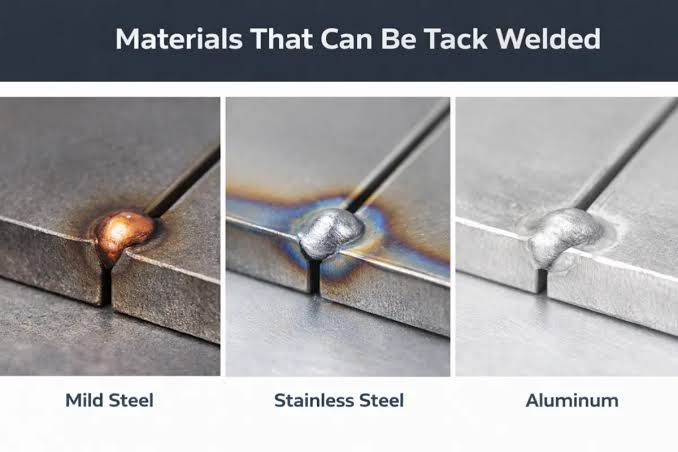
Understanding when to use tack welding allows welders to improve precision while minimizing distortion caused by heat. Whether working with carbon steel, stainless steel, aluminum, or sheet metal, tack welding creates a stable foundation that supports the final weld. Professional welders use this technique because even a slight shift in metal position can affect the strength, appearance, and durability of the finished joint.
From structural steel fabrication and pipeline installation to custom metalworking and automotive manufacturing, tack welding is considered an essential part of modern welding practices. Learning the right situations for using tack welds helps increase efficiency, reduce material waste, and produce stronger finished products that meet professional standards.
When to Use Tack Welding During Assembly
Understanding when to use tack welding begins with the assembly stage of any welding project. Before permanent welding starts, metal pieces must be aligned accurately according to design specifications. Tack welds temporarily secure these components, allowing welders to verify measurements and ensure proper fit before applying continuous weld beads.
Large fabrication projects often require multiple metal parts to remain perfectly aligned throughout the welding process. Structural steel beams, support columns, heavy machinery frames, and industrial equipment assemblies all benefit from tack welding because it prevents movement while reducing the chance of dimensional errors. Once every component is positioned correctly, the final welding process becomes much smoother and more efficient.
Tack welding is also valuable whenever heat distortion may become a concern. During welding, intense heat causes metal to expand and contract, sometimes leading to warping or misalignment. Properly placed tack welds distribute stress more evenly across the joint, helping preserve the original shape of the workpiece. This is especially important when welding thin sheet metal, stainless steel, or aluminum, where excessive heat can easily alter the material.
Another situation that demonstrates when to use tack welding is during complex fabrication involving multiple joints. Temporary welds provide enough strength to hold assemblies together while allowing adjustments if necessary. This flexibility reduces the likelihood of major repairs after permanent welding has already begun.
When to Use Tack Welding Across Different Industries
The importance of knowing when to use tack welding becomes even clearer when examining its industrial applications. Structural steel construction relies heavily on tack welding to assemble buildings, bridges, warehouses, and steel frameworks. Accurate tack weld placement allows engineers and fabricators to inspect alignment before final welds permanently secure the structure.
Automotive manufacturing is another industry where tack welding plays a vital role. Vehicle chassis, body panels, suspension systems, and exhaust components require precise positioning before continuous welding begins. Tack welding ensures every component remains correctly aligned, contributing to vehicle safety, structural strength, and manufacturing consistency.
Pipe welding also depends on understanding when to use tack welding. Pipeline systems, pressure vessels, and industrial piping require perfect alignment to achieve proper weld penetration and leak-free performance. Tack welds hold pipe sections securely while maintaining consistent root gaps throughout the welding process. This approach helps produce durable joints that meet strict engineering and safety standards.
Sheet metal fabrication provides another excellent example. Thin metal components used in HVAC systems, appliances, cabinets, and architectural products can easily deform during welding. Carefully spaced tack welds reduce heat-related distortion while preserving dimensional accuracy throughout fabrication.
Custom metal fabrication, marine engineering, agricultural machinery, aerospace manufacturing, and heavy equipment production all rely on tack welding to improve assembly precision. Modern inverter welding machines provide stable arc control and consistent heat output, making tack welding even more effective across these demanding industries.
When to Use Tack Welding for Stronger Weld Performance
Learning when to use tack welding also requires understanding the preparation and techniques that contribute to successful results. Clean metal surfaces are essential before placing tack welds. Rust, paint, grease, oil, and moisture should always be removed to ensure proper fusion and strong temporary welds. Good surface preparation improves both tack weld performance and the quality of the final weld.
Joint fit-up is equally important. Properly aligned materials reduce internal stress while allowing tack welds to hold components securely without excessive force. Welding clamps, positioning fixtures, and magnetic holders are commonly used to maintain accurate placement until permanent welding is completed.
Material thickness also influences when tack welding should be applied. Thin sheet metal generally requires smaller tack welds with controlled heat input to prevent distortion, while thicker structural steel often requires larger and stronger tack welds to stabilize heavy components during fabrication.
Inspection is another key part of professional welding practice. Tack welds should always be checked before final welding begins. Any signs of cracks, incomplete fusion, porosity, or weak penetration should be corrected immediately to prevent structural weaknesses in the completed weld. Early inspection helps avoid costly repairs and improves long-term reliability.
Experienced welders often use tack welding whenever a project involves multiple weld passes or complicated joint configurations. Alternating tack weld placement across opposite sides of the joint balances heat distribution and minimizes internal stress. This technique is especially valuable when welding stainless steel and aluminum because these materials expand rapidly when exposed to high temperatures.
As welding skills improve, professionals gain greater control over arc length, travel speed, electrode angle, and heat input. This experience allows them to recognize exactly when to use tack welding for maximum efficiency and consistently produce cleaner, stronger, and more attractive finished welds.
Conclusion
Understanding when to use tack welding is essential for producing precise, durable, and professional-quality welds across a wide range of fabrication projects. Tack welding should be used whenever accurate alignment, distortion control, secure fit-up, and reliable joint preparation are required before final welding. From structural steel construction and automotive manufacturing to pipeline installation, sheet metal fabrication, and custom metalworking, tack welding provides the stability needed to achieve consistent and long-lasting results.
By focusing on proper material preparation, accurate joint alignment, controlled heat input, and thorough inspection, welders can maximize the benefits of tack welding while reducing fabrication errors and improving productivity. Mastering when to use tack welding not only enhances weld quality but also strengthens structural integrity, increases efficiency, and ensures reliable performance in every welding application.
shell
ผู้เยี่ยมชม
Edward Evans
ผู้เยี่ยมชม
4 ส.ค. 2569 20:33 #1
For a long time, I was planning to replace several old machines in my production area, but I wanted to choose equipment that would truly improve my daily work. I started searching for a supplier that could provide reliable products, modern technologies, and suitable solutions for my business needs. After reviewing different options, I decided to focus on Turkey because this country is known for its strong industrial production and wide selection of machinery. I explored various equipment categories and compared different models before making my choice. During this research, I learned more about machinery and equipment from Turkey and discovered many useful solutions for improving production efficiency. The range of available products helped me find machines that matched my requirements in terms of performance and convenience. After installing the new equipment, I immediately noticed that several processes became faster and easier to manage. The machines worked reliably and helped my team achieve better results. I was pleased with the overall experience, including the selection process and the quality of the purchased products. This cooperation showed me that choosing the right industrial supplier can have a significant impact on business development and future success.
Edward Evans
ผู้เยี่ยมชม